How Sewer Flow Meters Are Installed
Engineering Guide
Installation quality controls data quality
Accurate sewer flow monitoring depends on site selection, mounting location, safe access, sensor setup, and verification.
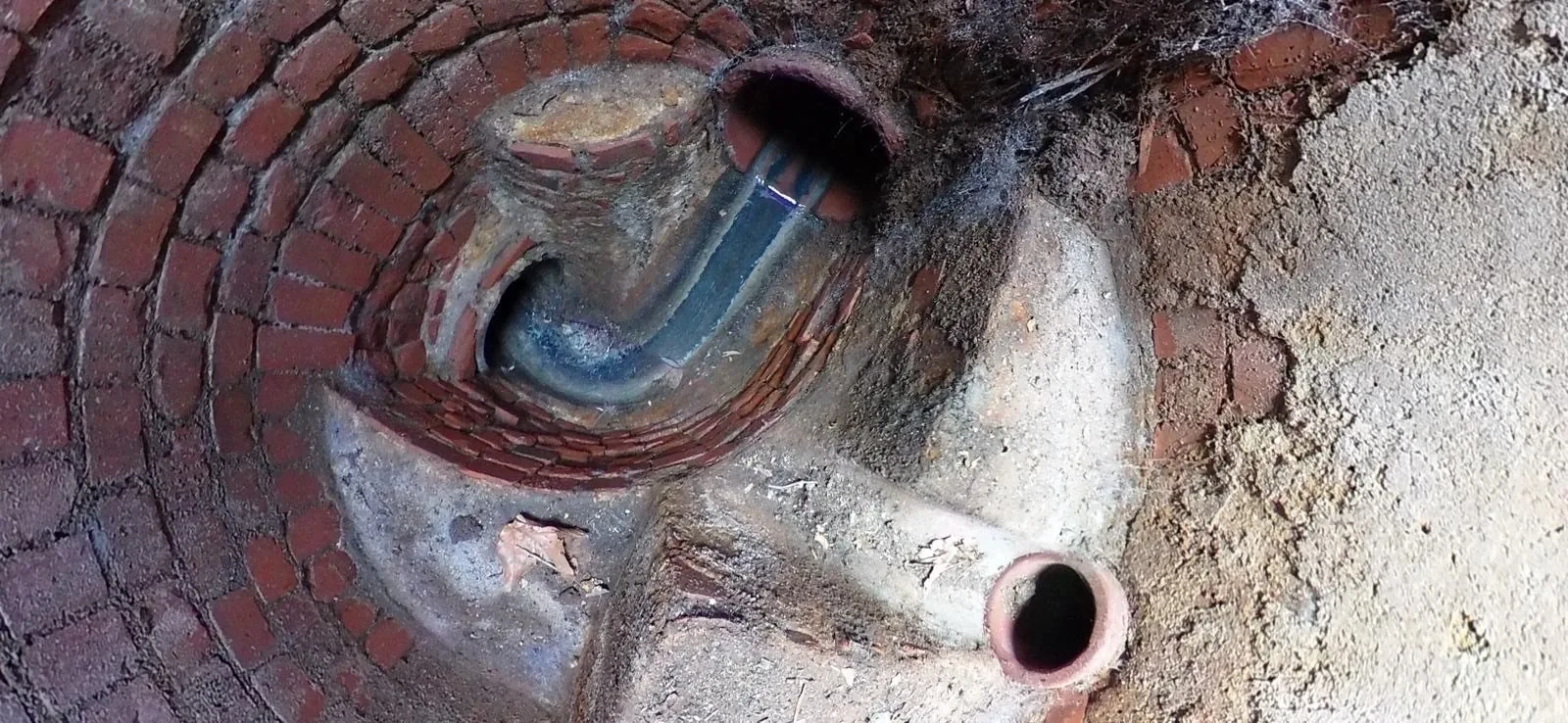
Installing a sewer flow meter requires entering an active sanitary sewer manhole — a permit-required confined space under OSHA 29 CFR 1910.146. Professional installation ensures accurate data collection, worker safety, and compliance with federal safety regulations.
Step 1: Pre-Installation Planning
Before any equipment is deployed, engineers review GIS data, as-built drawings, and pipe records to select monitoring locations that will produce the most useful data. Key selection criteria include pipe material and diameter (which affect sensor compatibility), pipe slope (which affects flow stability), upstream and downstream conditions (confluences, transitions, and potential backwater), access conditions (manhole depth, traffic exposure, physical accessibility), and tributary area served by the monitoring point.
The goal is to identify locations where flow is stable, measurable, and representative of the tributary area — while also being safe and practical to access for installation and maintenance.
Step 2: OSHA Confined Space Entry
Every sewer manhole entry requires a complete confined space entry procedure. Before any person enters the manhole, the entry team conducts atmospheric testing using a calibrated four-gas monitor to check for oxygen deficiency (below 19.5%), oxygen enrichment (above 23.5%), combustible gas concentration (LEL above 10%), hydrogen sulfide (H₂S above 10 ppm), and carbon monoxide (CO above 25 ppm).
Three designated roles are assigned for every entry: the entry supervisor (who authorizes the entry and monitors conditions), the authorized entrant (who enters the manhole), and the attendant (who remains at the surface and maintains communication). Continuous atmospheric monitoring is maintained throughout the entry, and rescue equipment is staged at the manhole opening.
Step 3: Sensor Mounting and Positioning
Area-velocity sensors are mounted on the pipe invert (the lowest point of the pipe cross-section) using mechanical brackets, stainless steel banding, or expansion anchors depending on pipe material and diameter. The sensor must be positioned to measure the full velocity profile across the flow stream — not just the surface velocity or bottom velocity, which are not representative of the average cross-sectional velocity.
For pipes with significant sediment deposits, the installation team may need to clean the invert area before mounting the sensor to ensure proper contact and accurate depth measurement.
Step 4: Calibration Verification
After the sensor is mounted, the installation team performs an initial velocity profile verification. This involves comparing the sensor's velocity reading against a reference measurement (typically a point velocity meter at multiple depths) to confirm that the installed sensor is producing accurate results. The depth measurement is verified against a physical depth measurement using a graduated rod.
Step 5: Telemetry Configuration
A cellular telemetry unit is installed at the surface, connected to the submerged sensor by shielded cable routed through the manhole frame. The telemetry unit is configured to record and transmit data at programmed intervals — typically every 5 or 15 minutes — to a cloud-based data management system. This enables near real time data uploads and remote quality assurance without requiring repeated field visits.
Step 6: Documentation
Every installation is documented with site photographs (manhole exterior, interior, sensor placement, telemetry unit), manhole geometry measurements (depth, pipe diameters, invert elevations), sensor placement diagrams, pipe condition observations, and initial velocity profile data. This documentation becomes part of the permanent project record and supports the quality assurance process throughout the monitoring period.
Need this service? Learn about our flow meter installation services or request a quote.
Request a Quote
Fixed-scope proposals within approximately 24 hours. No open-ended billing.